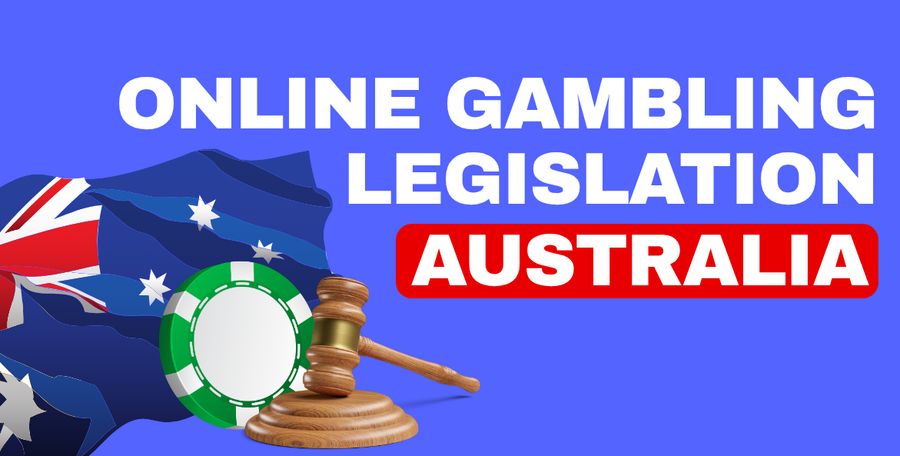
Australia’s gambling law is a layered mix of federal and state rules that allows land-based casinos and licensed wagering while tightly restricting most forms of real-money online casino gambling. Anyone operating in or writing about the Australian market needs to understand how federal laws, state regulators, and recent reforms around advertising, payments, and safer gambling interact.
|
|


Federal framework in Australia
At national level, the core statute is the Interactive Gambling Act 2001, which regulates remote and online gambling services offered to people in Australia. The Act adopts a prohibition-first approach, meaning online gambling is broadly banned unless it fits into specific, tightly defined exemptions.
Federal agencies play distinct roles in this framework. The Australian Communications and Media Authority supervises online gambling compliance, enforces advertising rules, and acts against illegal offshore sites, while AUSTRAC oversees anti‑money laundering and counter‑terrorism financing obligations for licensed gambling operators. The Australian Federal Police may be involved in serious enforcement action where interactive gambling or financial crime offences are suspected.
State and territory regulation
While the federal government controls the legality of online interactive gambling, land‑based gambling is primarily regulated at state and territory level. Each of Australia’s eight jurisdictions has its own licensing system, technical standards, harm‑minimisation rules, and enforcement powers for casinos, gaming machines, and local wagering operators.
Key regulators include Liquor and Gaming NSW and the Independent Liquor and Gaming Authority in New South Wales, the Victorian Gambling and Casino Control Commission in Victoria, and the Department of Racing, Gaming and Liquor (or its successor agencies) in Western Australia. Other bodies such as the ACT Gambling and Racing Commission, the Queensland Office of Liquor and Gaming Regulation, the Northern Territory Racing Commission, the Tasmanian Liquor and Gaming Commission, and South Australia’s Consumer and Business Services perform similar roles in their own regions.
What forms of gambling are legal?
Australia permits a broad range of regulated land‑based gambling products, from traditional casinos and pokies to wagering, lotteries, and keno. Licenced casinos and hotels or clubs can offer gaming machines and table games under strict local rules about licensing conditions, machine numbers, operating hours, and responsible gambling measures.
Online, the picture is much narrower. The Interactive Gambling Act prohibits the provision of real‑money online casino games such as virtual slots, roulette, and blackjack to people physically located in Australia, even when servers are offshore. In contrast, online sports betting and racing wagering are permitted where the operator holds an Australian state or territory licence and complies with both the IGA and local regulations.
The Interactive Gambling Act explained
The IGA defines “interactive gambling services” and makes it an offence to offer prohibited online gambling to customers in Australia, with heavy civil and criminal penalties for breaches. The law is drafted to ban all interactive gambling unless it falls into allowed categories, such as licensed online betting on sports or racing, which are treated as excluded or regulated services.
Under this framework, the law targets operators rather than individual players. Australian residents who use offshore sites are not usually prosecuted as consumers, but the ACMA can act against the sites themselves, including by ordering internet service providers to block access.
Online casinos and offshore sites
Operating an online casino that offers real‑money slots or table games to Australians is illegal under the IGA, regardless of where the site is hosted. Many offshore platforms still attempt to accept Australian players, but they run the risk of enforcement action, IP blocking, and reputational damage.
The ACMA has stepped up its program of blocking unlicensed and non‑compliant websites, regularly expanding a blacklist that now includes dozens of brands investigated and found to be in breach of the Act. Players are encouraged to check whether an interactive gambling operator is legal through official registers of licensed providers before depositing funds.
Licensing and compliance
For betting and land‑based gambling, operators must hold appropriate state or territory licences, which are granted only after stringent probity checks, financial assessments, and technical evaluations. Licensing bodies monitor ongoing compliance with conditions covering matters such as game integrity, staff suitability, financial reporting, and player protection.
On top of gambling‑specific requirements, licensed operators are “reporting entities” under federal anti‑money laundering and counter‑terrorism financing laws. This status requires risk‑based AML programs, customer due diligence, transaction monitoring, and reporting of suspicious activity to AUSTRAC.
Advertising and marketing rules
Australia imposes detailed restrictions on how gambling products can be promoted across television, radio, digital channels, and live sport. Rules limit when and where gambling ads can appear, with special protections during children’s programming and live sporting events when young audiences are most exposed.
Federal reforms have also tightened the way inducements, bonuses, and promotional offers are presented online, with regulators focusing on vulnerable consumers and those at risk of harm. The IGA and associated standards restrict advertising for prohibited online gambling services, and the ACMA has powers to act where marketing campaigns breach these rules.
Responsible gambling and BetStop
Harm minimisation is a central objective across Australian gambling law, reflected in both state regulations and national policy initiatives. Licensed venues and betting operators must implement responsible gambling tools such as pre‑commitment limits, clear information about odds, staff training, and accessible self‑exclusion mechanisms.
A major recent innovation is BetStop, the national self‑exclusion register that allows individuals to ban themselves from all licensed online betting providers with a single registration. Operators must check the register before opening accounts and are banned from marketing to people who have opted into BetStop, making it a powerful nationwide protection tool.
Payments, KYC and ID checks
New federal rules have reshaped how players can fund their online wagering accounts. Legislation passed in recent years prohibits the use of credit cards and certain credit‑related products for interactive wagering, reflecting concerns about debt‑fuelled gambling.
Know‑your‑customer and identity verification obligations have also become more prescriptive. Operators must verify the identity of customers before creating betting accounts or offering designated services, rather than after a grace period. This tighter onboarding is designed to reduce fraud, money laundering, and to ensure those on self‑exclusion lists are not able to open new accounts.
Recent reforms and 2025 trends
Australia continues to refine its gambling framework through ongoing reviews and legislative amendments. Recent changes include stronger enforcement powers for the ACMA, updates to AML/CTF guidance for gambling providers, and state‑based reforms such as slowing gaming machine spin speeds and revising venue‑level harm minimisation settings.
Policy discussions are examining how to respond to offshore operators, new technologies, and digital marketing channels, with suggestions ranging from tougher penalties to clearer blocking mechanisms. The direction of travel favours safer gambling, greater transparency, and more unified national standards, even though licensing remains largely decentralised.
Player protections and support services
From a consumer point of view, Australian gambling law aims to strike a balance between allowing regulated entertainment and minimising harm. Government‑funded services provide counselling, financial advice, and support for people experiencing gambling‑related problems, and awareness campaigns encourage safer play.
Players are advised to use only licensed operators, to take advantage of deposit limits and self‑exclusion tools, and to seek help early if gambling starts to affect their wellbeing or finances. Clear complaint channels exist through state regulators, enabling disputes about fairness, payouts, or venue conduct to be formally investigated.
Future outlook for Australian gambling law
Looking ahead, the Australian market is expected to remain tightly regulated, particularly in relation to online casino‑style products and high‑risk advertising practices. Regulators are likely to keep refining licensing conditions, AML requirements, and responsible gambling frameworks to keep pace with new technologies and consumer behaviour.
For operators, affiliates, and content publishers, this means ongoing attention to licensing status, product scope, and compliance messaging will remain essential. For players, the emphasis will continue to be on safer gambling, robust protections, and transparent, legal options rather than unregulated offshore alternatives.
This review provides general information on Australian gambling law and does not constitute legal advice; for case‑specific questions, consultation with a qualified legal professional is recommended.